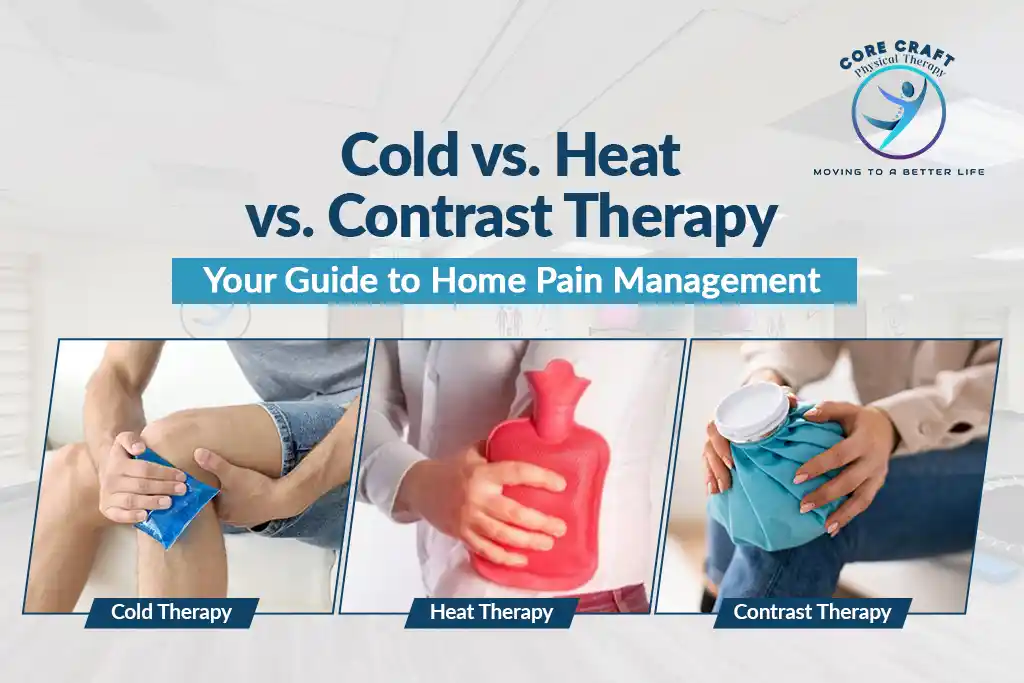
One of the most common questions we hear at the clinic is: “Should I use ice or heat?” Choosing between cold vs heat therapy can be the difference between a quick recovery and a lingering ache. Used correctly, both are powerful tools for home pain management. However, using them incorrectly can accidentally delay healing.
This guide will help you understand how to achieve effective pain relief at home and when to use each method safely.
When to Use Cold (Cryotherapy)
Cold therapy is your “fire extinguisher.” It is best used when inflammation, swelling, or sharp, acute pain is present. Ice works by constricting blood vessels (vasoconstriction), which reduces the flow of inflammatory fluids to the area and numbs irritated nerve endings.
Best for:
- Recent injuries: Within the first 48–72 hours.
- Visible swelling: “Puffy” joints or red, warm areas.
- Post-activity flare-ups: For example, icing a knee after a long walk.
- Acute strains: Like a sudden “pop” in a muscle or a twisted ankle.
How to apply:
- Wrap your ice pack in a thin towel to protect the skin.
- Apply for 10–15 minutes only.
- Wait until the skin returns to its normal temperature before re-applying.
When to Use Heat (Thermotherapy)
Think of heat therapy for chronic pain as a way to “unlock” your body. Heat does the opposite of ice; it opens blood vessels (vasodilation), bringing fresh, oxygenated blood to the area to help tissues heal and relax.
Best for:
- Chronic stiffness: Muscles that feel “tight” or “locked” for weeks or months.
- Morning stiffness: Getting the joints moving after waking up.
- Stress tension: Tightness in the neck and shoulders from sitting at a desk.
- Pre-exercise: Warming up a stiff area before a light stretch.
How to apply:
- Use a heating pad or warm towel for 15–20 minutes.
- Ensure the temperature is “soothingly warm,” never “burning hot.”
- Pro Tip: Never sleep with a heating pad turned on, as this can lead to skin burns.
Contrast Therapy: The “Pumping” Effect
Contrast therapy is the practice of alternating between heat and cold. This creates a physiological “pump”—the heat expands the vessels, and the cold constricts them. This can be an incredibly effective method for home pain management of lingering, stubborn injuries that aren’t quite “acute” but aren’t fully healed either.
When to use it:
- Lingering joint stiffness with mild swelling.
- Recovering from a sub-acute muscle strain (3–5 days post-injury).
- Improving circulation in the hands or feet.
The Routine:
- Heat for 3 minutes (to bring blood in).
- Cold for 1 minute (to flush inflammation out).
- Repeat 3–4 times, always ending on the sensation your body needs most (usually cold for pain or heat for stiffness).
Quick Reference Summary
| Tool | Primary Goal | Use It For… |
| Cold | Reduce swelling & numbing | Recent sprains, “hot” joints, sharp pain. |
| Heat | Relax muscles & increase flow | Stiff back, chronic aches, muscle tension. |
| Contrast | Circulation “pump” | Stubborn stiffness, recovery from old injuries. |
When Home Remedies Aren’t Enough
While these methods provide excellent pain relief at home, they are often just addressing the symptoms, not the source. If you find yourself constantly reaching for the heating pad just to get through the day, it’s a sign that your body needs a more permanent solution.
It’s time to see a physical therapist if:
- Your pain lasts more than two weeks despite home care.
- You experience numbness, tingling, or “pins and needles.”
- The pain returns every time you stop using heat or ice.
- You are avoiding certain activities because you’re afraid of the pain.
At our clinic, we don’t just help you manage the pain—we help you solve it. Whether you need a guided recovery plan or specialized neurological physiotherapy, we are here to help you move with confidence again.